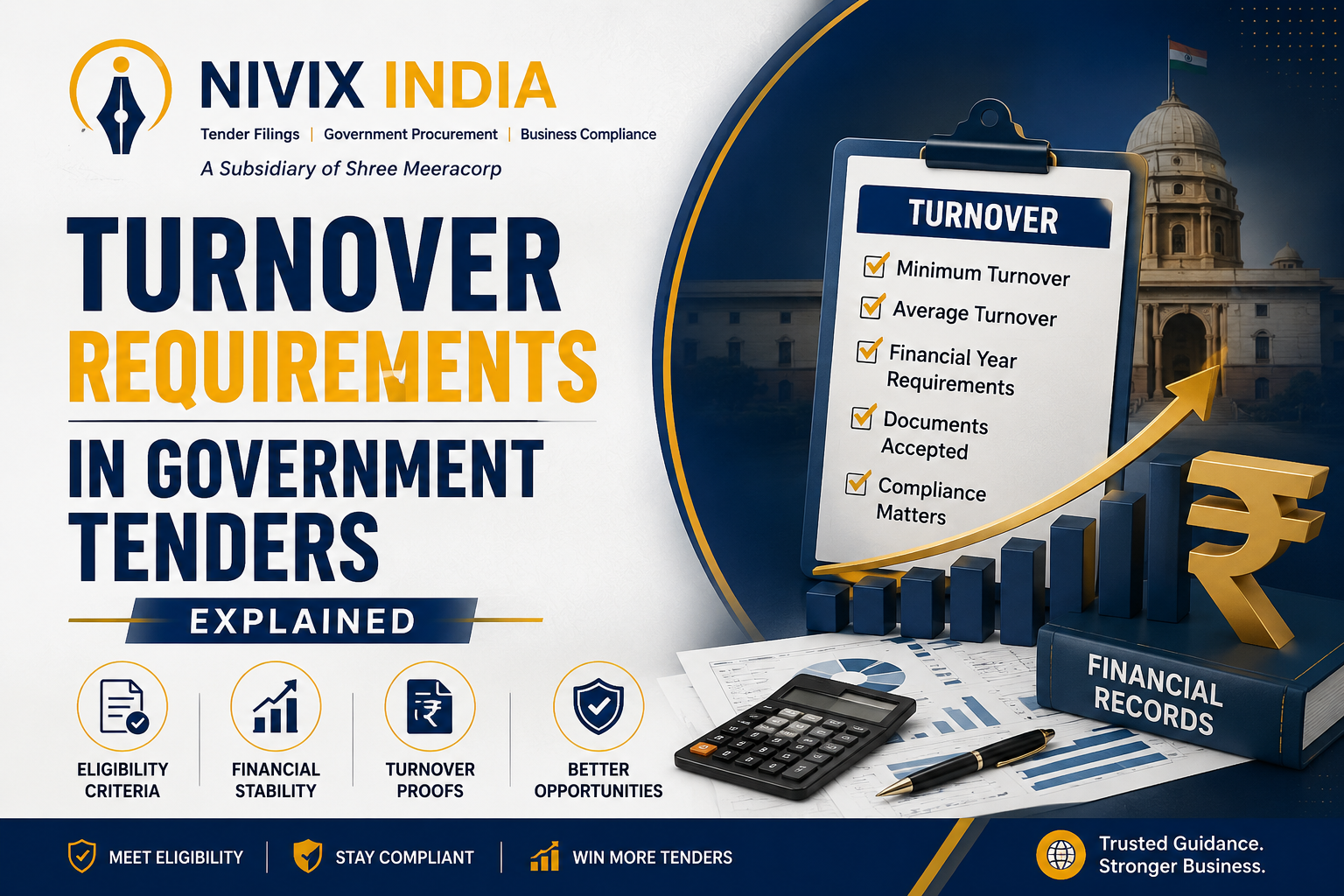
Turnover Requirements in Government Tenders Explained
Government tenders provide valuable opportunities for businesses to supply goods, deliver services, and execute projects for various government departments. However, before submitting a bid, every business should carefully review the eligibility criteria mentioned in the tender document. One of the most important financial requirements is the minimum turnover criterion.
Many businesses believe they are automatically ineligible because of their turnover, while others submit bids without checking the financial requirements and face rejection during technical evaluation. Understanding turnover requirements can help businesses select suitable tenders and prepare better bids.
What is Turnover?
Turnover refers to the total revenue earned by a business from its regular operations during a financial year. In government tenders, turnover is used to assess whether a bidder has the financial capacity to complete the contract successfully.
It does not necessarily represent profit. Instead, it reflects the scale and stability of the business.
Why is Turnover Important in Government Tenders?
Government organizations want to ensure that selected bidders have sufficient financial strength to handle the project. Turnover requirements help authorities evaluate whether a business can manage resources, manpower, materials, and operational expenses throughout the contract period.
A financially stable bidder is generally considered more capable of completing the work on time and maintaining project quality.
Where Can You Find the Turnover Requirement?
The turnover condition is usually mentioned under sections such as:
• Eligibility Criteria
• Technical Qualification
• Financial Eligibility
• Bid Qualification Requirements
• Tender Conditions
Every bidder should read these sections carefully before preparing the bid.
How is Turnover Calculated?
Most government departments consider turnover based on audited financial statements. Depending on the tender, the authority may ask for:
• Turnover of the latest financial year
• Average turnover of the last three financial years
• Turnover for a specific number of previous years
For example:
Financial Year Turnover FY 2022–23 ₹1.80 Crore
FY 2023–24 ₹2.20 Crore
FY 2024–25 ₹2.50 Crore
Average Turnover:
(1.80 + 2.20 + 2.50) ÷ 3 = ₹2.16 Crore
If the tender requires an average turnover of ₹2 Crore, the bidder satisfies the financial eligibility.
Documents Required
Government departments generally ask for supporting financial documents such as:
• Audited Balance Sheet
• Profit & Loss Account
• Chartered Accountant Certificate
• Income Tax Return
• Auditor's Report
• Financial Statements
Always submit complete and properly signed documents as required in the tender.
Do All Tenders Have High Turnover Requirements?
No. Turnover requirements vary depending on the nature and value of the project.
Small procurement tenders may have little or no turnover requirement, while large infrastructure or high-value projects often require higher financial eligibility.
Instead of assuming you are not eligible, review each tender individually.
Can MSMEs and Startups Participate?
Yes. Many government tenders encourage participation from MSMEs and startups. In certain cases, eligible businesses may receive relaxations under applicable procurement policies.
However, these benefits depend on the specific tender conditions. Always verify the eligibility criteria mentioned in the tender document before submitting your bid.
What Happens if Your Turnover is Lower?
If your turnover does not meet the prescribed requirement, your bid may not qualify during technical evaluation.
Rather than applying for every available tender, businesses should identify opportunities that match their financial capacity and experience.
Common Mistakes to Avoid
Many bidders lose opportunities because of avoidable errors, including:
• Not reading the eligibility criteria carefully.
• Submitting incomplete financial documents.
• Using incorrect turnover figures.
• Ignoring the average turnover calculation.
• Assuming MSME registration removes all eligibility requirements.
Careful preparation can help prevent these issues.
Tips to Improve Tender Eligibility
Businesses can strengthen their eligibility by:
• Maintaining accurate financial records.
• Completing statutory filings on time.
• Keeping audited financial statements ready.
• Improving annual business turnover through sustainable growth.
• Organizing tender documents in advance.
• Monitoring suitable government tender opportunities regularly.
Being prepared saves time and reduces the risk of rejection.
Frequently Asked Questions
1. What is the turnover requirement in a government tender?
It is the minimum business revenue specified by the procuring authority as part of the financial eligibility criteria.
2. How is turnover verified?
Authorities generally verify turnover through audited financial statements, CA certificates, and other financial documents specified in the tender.
3. Is profit the same as turnover?
No. Turnover is the total revenue earned from business operations, whereas profit is the amount remaining after deducting expenses.
4. Can a new business apply for government tenders?
Yes. Some tenders allow startups and new businesses to participate, depending on the eligibility conditions.
5. Does every government tender require minimum turnover?
No. The requirement varies depending on the department, project value, and nature of the work.
Conclusion
Turnover requirements play an important role in government tender eligibility because they help departments assess the financial capability of bidders. However, every tender has different qualification criteria, and not all projects require high turnover.
Before applying, businesses should carefully study the tender document, understand the financial requirements, and prepare all supporting documents correctly. A well-prepared bid improves the chances of successful participation and reduces the possibility of technical rejection.
Whether you are a startup, MSME, contractor, supplier, or established company, understanding turnover requirements will help you make informed bidding decisions and participate more confidently in government procurement opportunities.
Government tenders provide valuable opportunities for businesses to supply goods, deliver services, and execute projects for various government departments. However, before submitting a bid, every business should carefully review the eligibility criteria mentioned in the tender document. One of the most important financial requirements is the minimum turnover criterion.
Many businesses believe they are automatically ineligible because of their turnover, while others submit bids without checking the financial requirements and face rejection during technical evaluation. Understanding turnover requirements can help businesses select suitable tenders and prepare better bids.
What is Turnover?
Turnover refers to the total revenue earned by a business from its regular operations during a financial year. In government tenders, turnover is used to assess whether a bidder has the financial capacity to complete the contract successfully.
It does not necessarily represent profit. Instead, it reflects the scale and stability of the business.
Why is Turnover Important in Government Tenders?
Government organizations want to ensure that selected bidders have sufficient financial strength to handle the project. Turnover requirements help authorities evaluate whether a business can manage resources, manpower, materials, and operational expenses throughout the contract period.
A financially stable bidder is generally considered more capable of completing the work on time and maintaining project quality.
Where Can You Find the Turnover Requirement?
The turnover condition is usually mentioned under sections such as:
• Eligibility Criteria
• Technical Qualification
• Financial Eligibility
• Bid Qualification Requirements
• Tender Conditions
Every bidder should read these sections carefully before preparing the bid.
How is Turnover Calculated?
Most government departments consider turnover based on audited financial statements. Depending on the tender, the authority may ask for:
• Turnover of the latest financial year
• Average turnover of the last three financial years
• Turnover for a specific number of previous years
For example:
Financial Year Turnover FY 2022–23 ₹1.80 Crore
FY 2023–24 ₹2.20 Crore
FY 2024–25 ₹2.50 Crore
Average Turnover:
(1.80 + 2.20 + 2.50) ÷ 3 = ₹2.16 Crore
If the tender requires an average turnover of ₹2 Crore, the bidder satisfies the financial eligibility.
Documents Required
Government departments generally ask for supporting financial documents such as:
• Audited Balance Sheet
• Profit & Loss Account
• Chartered Accountant Certificate
• Income Tax Return
• Auditor's Report
• Financial Statements
Always submit complete and properly signed documents as required in the tender.
Do All Tenders Have High Turnover Requirements?
No. Turnover requirements vary depending on the nature and value of the project.
Small procurement tenders may have little or no turnover requirement, while large infrastructure or high-value projects often require higher financial eligibility.
Instead of assuming you are not eligible, review each tender individually.
Can MSMEs and Startups Participate?
Yes. Many government tenders encourage participation from MSMEs and startups. In certain cases, eligible businesses may receive relaxations under applicable procurement policies.
However, these benefits depend on the specific tender conditions. Always verify the eligibility criteria mentioned in the tender document before submitting your bid.
What Happens if Your Turnover is Lower?
If your turnover does not meet the prescribed requirement, your bid may not qualify during technical evaluation.
Rather than applying for every available tender, businesses should identify opportunities that match their financial capacity and experience.
Common Mistakes to Avoid
Many bidders lose opportunities because of avoidable errors, including:
• Not reading the eligibility criteria carefully.
• Submitting incomplete financial documents.
• Using incorrect turnover figures.
• Ignoring the average turnover calculation.
• Assuming MSME registration removes all eligibility requirements.
Careful preparation can help prevent these issues.
Tips to Improve Tender Eligibility
Businesses can strengthen their eligibility by:
• Maintaining accurate financial records.
• Completing statutory filings on time.
• Keeping audited financial statements ready.
• Improving annual business turnover through sustainable growth.
• Organizing tender documents in advance.
• Monitoring suitable government tender opportunities regularly.
Being prepared saves time and reduces the risk of rejection.
Frequently Asked Questions
1. What is the turnover requirement in a government tender?
It is the minimum business revenue specified by the procuring authority as part of the financial eligibility criteria.
2. How is turnover verified?
Authorities generally verify turnover through audited financial statements, CA certificates, and other financial documents specified in the tender.
3. Is profit the same as turnover?
No. Turnover is the total revenue earned from business operations, whereas profit is the amount remaining after deducting expenses.
4. Can a new business apply for government tenders?
Yes. Some tenders allow startups and new businesses to participate, depending on the eligibility conditions.
5. Does every government tender require minimum turnover?
No. The requirement varies depending on the department, project value, and nature of the work.
Conclusion
Turnover requirements play an important role in government tender eligibility because they help departments assess the financial capability of bidders. However, every tender has different qualification criteria, and not all projects require high turnover.
Before applying, businesses should carefully study the tender document, understand the financial requirements, and prepare all supporting documents correctly. A well-prepared bid improves the chances of successful participation and reduces the possibility of technical rejection.
Whether you are a startup, MSME, contractor, supplier, or established company, understanding turnover requirements will help you make informed bidding decisions and participate more confidently in government procurement opportunities.
TENDER ASSISTANCE
Need Help With Tender Filing?
Get expert assistance for tender search, documentation, eligibility checks and bid submission.
