Tender
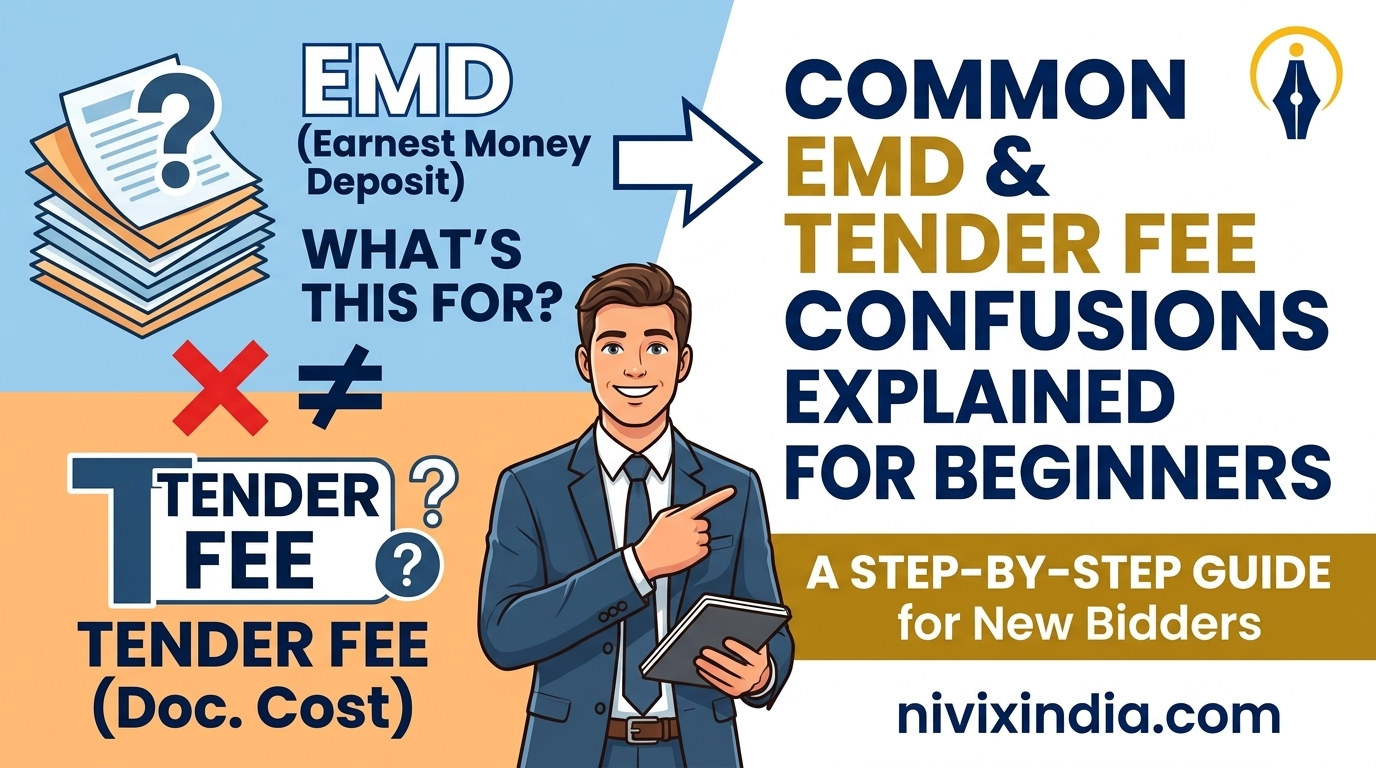
Common EMD and Tender Fee Confusions Explained for Beginners
If you're new to government tendering, terms like EMD (Earnest Money Deposit) and Tender Fee can be confusing. Many first-time bidders assume they are the same, but they serve completely different purposes. In this guide, Nivix India explains the difference between EMD and Tender Fee, when they are applicable, and how to avoid common mistakes while participating in government tenders.
Common EMD and Tender Fee Confusions Explained for Beginners
Government tenders provide excellent business opportunities for contractors, suppliers, manufacturers, service providers, and MSMEs. However, many first-time bidders face confusion while reading tender documents because of terms like EMD, Tender Fee, Bid Security Declaration, and EMD Exemption.
A small misunderstanding regarding these payments can result in your bid being rejected before technical evaluation even begins.
This article by Nivix India explains everything in simple language so that beginners can confidently participate in government tenders.
What is Tender Fee?
A Tender Fee (also known as Tender Document Fee or Cost of Tender) is the amount charged by the tender authority for providing access to the tender documents.
This fee is generally:
• Non-refundable
• Paid before bid submission
• Mentioned clearly in the tender notice
• Applicable only if required by the tender authority
What is EMD (Earnest Money Deposit)?
Earnest Money Deposit (EMD) is a security amount submitted by bidders to show that they are serious about participating in the tender process.
Unlike Tender Fee, EMD is generally refundable according to the tender conditions if the bidder is not selected and has complied with all requirements.
Why Do Government Departments Ask for EMD?
EMD protects the tendering authority from situations where a bidder:
• Withdraws the bid during validity period
• Refuses to sign the agreement after selection
• Fails to submit required documents
• Does not complete post-award formalities Can MSMEs Get EMD Exemption?
Many beginners believe that every MSME automatically receives an EMD exemption.
This is not always true.
Whether an exemption is available depends on:
• The tender conditions
• Applicable government procurement policies
• Eligibility criteria mentioned in the bid document
• Supporting documents required by the procuring authority
Common Mistakes Beginners Make
Assuming EMD and Tender Fee are the same
These are two completely different payments with different purposes.
Missing the Payment Deadline
Late payment can make the bid invalid.
Uploading Wrong Payment Proof
Always upload the correct receipt or proof if the portal requires it.
Claiming Exemption Without Supporting Documents
If the tender requires proof for an exemption, ensure all required documents are submitted.
Ignoring Tender Instructions
Different departments may have different payment methods, timelines, or exemption rules.
Tips Before Submitting Any Tender • Read the tender document completely.
• Check whether Tender Fee is applicable.
• Verify if EMD is required or if an exemption is available.
• Follow the prescribed payment method.
• Keep payment receipts safely.
• Upload all supporting documents correctly.
• Review your submission before the deadline.
How Nivix India Helps
Understanding tender requirements can be challenging for first-time bidders. Nivix India assists businesses by providing professional support with:
• Tender document review
• Bid documentation
• GeM Registration support
• Government tender guidance
• Railway tender assistance
• Online bid submission support
• Compliance documentation
Frequently Asked Questions (FAQs)
1. Is Tender Fee refundable?
In most cases, Tender Fee is non-refundable, but bidders should always check the specific tender conditions.
2. Is EMD always refundable?
It is generally refundable according to the tender terms, subject to compliance with the bid conditions.
3. Are EMD and Bid Security the same?
Many tenders use EMD as a form of bid security, while some may adopt alternative mechanisms such as a Bid Security Declaration were permitted by the tender conditions.
4. Can I submit a bid without paying EMD?
Only if the tender permits an exemption or an alternative security arrangement and you meet the stated eligibility requirements.
5. Where can I find EMD details?
The amount, payment method, exemptions, and deadlines are mentioned in the tender document.
Conclusion
For every new bidder, understanding the difference between Tender Fee and EMD is essential. Although both involve payments related to government tenders, their purpose and rules are entirely different. Carefully reading the tender document, following the payment instructions, and ensuring compliance can significantly reduce the risk of bid rejection.
If you need professional assistance with Government Tenders, GeM Registration, Railway Tenders, or complete documentation support, Nivix India is here to guide you through the process.
Government tenders provide excellent business opportunities for contractors, suppliers, manufacturers, service providers, and MSMEs. However, many first-time bidders face confusion while reading tender documents because of terms like EMD, Tender Fee, Bid Security Declaration, and EMD Exemption.
A small misunderstanding regarding these payments can result in your bid being rejected before technical evaluation even begins.
This article by Nivix India explains everything in simple language so that beginners can confidently participate in government tenders.
What is Tender Fee?
A Tender Fee (also known as Tender Document Fee or Cost of Tender) is the amount charged by the tender authority for providing access to the tender documents.
This fee is generally:
• Non-refundable
• Paid before bid submission
• Mentioned clearly in the tender notice
• Applicable only if required by the tender authority
What is EMD (Earnest Money Deposit)?
Earnest Money Deposit (EMD) is a security amount submitted by bidders to show that they are serious about participating in the tender process.
Unlike Tender Fee, EMD is generally refundable according to the tender conditions if the bidder is not selected and has complied with all requirements.
Why Do Government Departments Ask for EMD?
EMD protects the tendering authority from situations where a bidder:
• Withdraws the bid during validity period
• Refuses to sign the agreement after selection
• Fails to submit required documents
• Does not complete post-award formalities Can MSMEs Get EMD Exemption?
Many beginners believe that every MSME automatically receives an EMD exemption.
This is not always true.
Whether an exemption is available depends on:
• The tender conditions
• Applicable government procurement policies
• Eligibility criteria mentioned in the bid document
• Supporting documents required by the procuring authority
Common Mistakes Beginners Make
Assuming EMD and Tender Fee are the same
These are two completely different payments with different purposes.
Missing the Payment Deadline
Late payment can make the bid invalid.
Uploading Wrong Payment Proof
Always upload the correct receipt or proof if the portal requires it.
Claiming Exemption Without Supporting Documents
If the tender requires proof for an exemption, ensure all required documents are submitted.
Ignoring Tender Instructions
Different departments may have different payment methods, timelines, or exemption rules.
Tips Before Submitting Any Tender • Read the tender document completely.
• Check whether Tender Fee is applicable.
• Verify if EMD is required or if an exemption is available.
• Follow the prescribed payment method.
• Keep payment receipts safely.
• Upload all supporting documents correctly.
• Review your submission before the deadline.
How Nivix India Helps
Understanding tender requirements can be challenging for first-time bidders. Nivix India assists businesses by providing professional support with:
• Tender document review
• Bid documentation
• GeM Registration support
• Government tender guidance
• Railway tender assistance
• Online bid submission support
• Compliance documentation
Frequently Asked Questions (FAQs)
1. Is Tender Fee refundable?
In most cases, Tender Fee is non-refundable, but bidders should always check the specific tender conditions.
2. Is EMD always refundable?
It is generally refundable according to the tender terms, subject to compliance with the bid conditions.
3. Are EMD and Bid Security the same?
Many tenders use EMD as a form of bid security, while some may adopt alternative mechanisms such as a Bid Security Declaration were permitted by the tender conditions.
4. Can I submit a bid without paying EMD?
Only if the tender permits an exemption or an alternative security arrangement and you meet the stated eligibility requirements.
5. Where can I find EMD details?
The amount, payment method, exemptions, and deadlines are mentioned in the tender document.
Conclusion
For every new bidder, understanding the difference between Tender Fee and EMD is essential. Although both involve payments related to government tenders, their purpose and rules are entirely different. Carefully reading the tender document, following the payment instructions, and ensuring compliance can significantly reduce the risk of bid rejection.
If you need professional assistance with Government Tenders, GeM Registration, Railway Tenders, or complete documentation support, Nivix India is here to guide you through the process.
