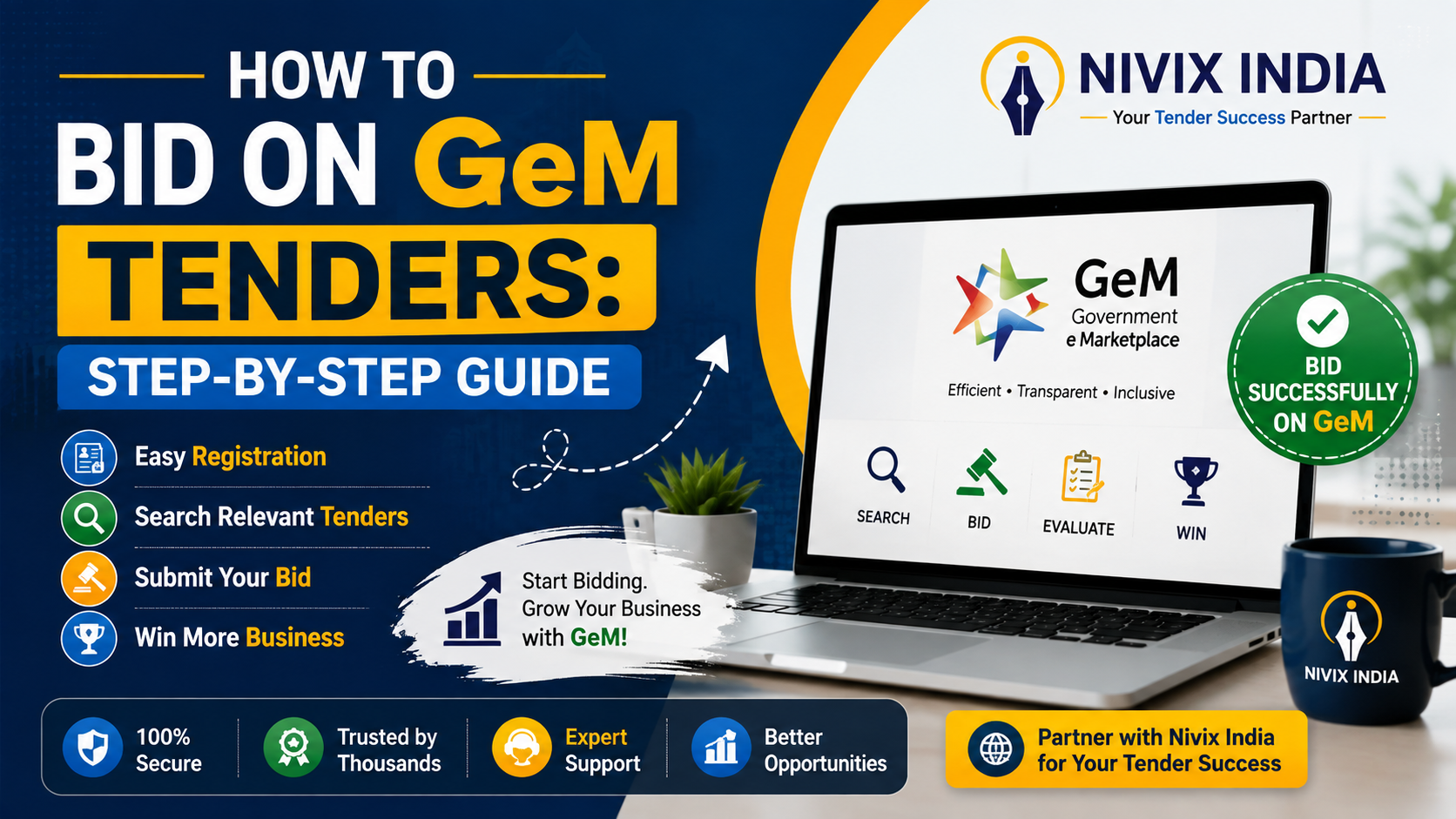
1. Complete Your GeM Seller Registration
Before participating in GeM bids, a business generally needs an appropriate seller account on the GeM portal.
Depending on the business, information may include:
• Business details
• PAN
• GST details, where applicable
• Bank account information
• Contact details
• Product or service information
• Required registrations and certifications
Make sure the information in your GeM profile is accurate and updated.
2. Find Suitable GeM Tenders
Once your seller profile is ready, search for tenders relevant to your products or services.
You can search using relevant:
• Product names
• Service categories
• Keywords
• Bid numbers
• Buyer departments
• Locations
Do not focus only on the tender value. A tender should be evaluated based on your actual capability to meet its requirements.
3. Read the Complete Bid Document
This is one of the most important steps.
Before deciding to participate, carefully review the complete bid details, including:
• Product or service specifications
• Quantity
• Delivery location
• Delivery period
• Eligibility criteria
• Turnover requirements
• Experience requirements
• Technical qualifications
• EMD, if applicable
• Bid security requirements
• Certifications
• Buyer-specific conditions
• Evaluation method
• Important dates
A bid that appears suitable at first may have conditions that make it unsuitable for your business.
4. Check Your Eligibility
After reading the tender conditions, compare them with your business credentials.
Check whether you meet requirements relating to:
• Experience
• Annual turnover
• Product specifications
• OEM authorization, where required
• Certifications
• Past supply experience
• Technical capacity
• Registration requirements
If a mandatory eligibility condition is not satisfied, carefully review the bid terms before proceeding.
5. Prepare the Required Documents
The documents required depend on the specific GeM bid.
Common documents may include:
• PAN
• GST certificate
• Udyam/MSME registration
• Company or firm registration documents
• Experience certificates
• Purchase orders
• Completion certificates
• Turnover documents
• Technical specifications
• Product certifications
• OEM authorization
• Bank-related documents
• Declarations and undertakings
Make sure documents are current, readable, and consistent with your GeM profile.
6. Prepare Your Technical Offer
The technical offer should clearly demonstrate compliance with the buyer's requirements.
Compare your product or service against every important specification mentioned in the bid.
Avoid making unsupported claims. If the buyer has specified a particular technical standard, provide appropriate supporting documents wherever required.
A technically incomplete offer can create problems during evaluation.
7. Calculate Your Commercial Offer Carefully
Price is an important part of many procurement evaluations, but businesses should avoid reducing their price without understanding the actual cost.
Before quoting, consider:
• Product cost
• Transportation
• Packaging
• Taxes
• Labour
• Installation
• Warranty obligations
• Service costs
• Other applicable expenses
Your bid should be commercially viable for your business while complying with the tender's pricing requirements.
8. Submit the GeM Bid Before the Deadline
After completing the technical and commercial requirements, submit the bid through the GeM portal before the specified closing date and time.
Do not wait until the last moment. Technical problems, document issues, or payment-related delays can affect submission.
Always check the final submission status and retain relevant records.
How Nivix India Can Help
Nivix India provides professional assistance for GeM registration, government tender support, tender documentation, and bid-related services.
Our support can help businesses understand tender requirements, organize documentation, identify relevant opportunities, and prepare their bidding process more systematically.
Tender participation always depends on the specific bid conditions, buyer requirements, evaluation process, and applicable rules. No service provider can guarantee a tender award.
Conclusion
Learning how to bid on GeM tenders is about more than simply submitting a price. Successful participation requires careful tender selection, eligibility checking, proper documentation, technical compliance, accurate pricing, and regular monitoring.
Businesses should evaluate every tender carefully before participating and make sure they can meet the
Before participating in GeM bids, a business generally needs an appropriate seller account on the GeM portal.
Depending on the business, information may include:
• Business details
• PAN
• GST details, where applicable
• Bank account information
• Contact details
• Product or service information
• Required registrations and certifications
Make sure the information in your GeM profile is accurate and updated.
2. Find Suitable GeM Tenders
Once your seller profile is ready, search for tenders relevant to your products or services.
You can search using relevant:
• Product names
• Service categories
• Keywords
• Bid numbers
• Buyer departments
• Locations
Do not focus only on the tender value. A tender should be evaluated based on your actual capability to meet its requirements.
3. Read the Complete Bid Document
This is one of the most important steps.
Before deciding to participate, carefully review the complete bid details, including:
• Product or service specifications
• Quantity
• Delivery location
• Delivery period
• Eligibility criteria
• Turnover requirements
• Experience requirements
• Technical qualifications
• EMD, if applicable
• Bid security requirements
• Certifications
• Buyer-specific conditions
• Evaluation method
• Important dates
A bid that appears suitable at first may have conditions that make it unsuitable for your business.
4. Check Your Eligibility
After reading the tender conditions, compare them with your business credentials.
Check whether you meet requirements relating to:
• Experience
• Annual turnover
• Product specifications
• OEM authorization, where required
• Certifications
• Past supply experience
• Technical capacity
• Registration requirements
If a mandatory eligibility condition is not satisfied, carefully review the bid terms before proceeding.
5. Prepare the Required Documents
The documents required depend on the specific GeM bid.
Common documents may include:
• PAN
• GST certificate
• Udyam/MSME registration
• Company or firm registration documents
• Experience certificates
• Purchase orders
• Completion certificates
• Turnover documents
• Technical specifications
• Product certifications
• OEM authorization
• Bank-related documents
• Declarations and undertakings
Make sure documents are current, readable, and consistent with your GeM profile.
6. Prepare Your Technical Offer
The technical offer should clearly demonstrate compliance with the buyer's requirements.
Compare your product or service against every important specification mentioned in the bid.
Avoid making unsupported claims. If the buyer has specified a particular technical standard, provide appropriate supporting documents wherever required.
A technically incomplete offer can create problems during evaluation.
7. Calculate Your Commercial Offer Carefully
Price is an important part of many procurement evaluations, but businesses should avoid reducing their price without understanding the actual cost.
Before quoting, consider:
• Product cost
• Transportation
• Packaging
• Taxes
• Labour
• Installation
• Warranty obligations
• Service costs
• Other applicable expenses
Your bid should be commercially viable for your business while complying with the tender's pricing requirements.
8. Submit the GeM Bid Before the Deadline
After completing the technical and commercial requirements, submit the bid through the GeM portal before the specified closing date and time.
Do not wait until the last moment. Technical problems, document issues, or payment-related delays can affect submission.
Always check the final submission status and retain relevant records.
How Nivix India Can Help
Nivix India provides professional assistance for GeM registration, government tender support, tender documentation, and bid-related services.
Our support can help businesses understand tender requirements, organize documentation, identify relevant opportunities, and prepare their bidding process more systematically.
Tender participation always depends on the specific bid conditions, buyer requirements, evaluation process, and applicable rules. No service provider can guarantee a tender award.
Conclusion
Learning how to bid on GeM tenders is about more than simply submitting a price. Successful participation requires careful tender selection, eligibility checking, proper documentation, technical compliance, accurate pricing, and regular monitoring.
Businesses should evaluate every tender carefully before participating and make sure they can meet the
TENDER ASSISTANCE
Need Help With Tender Filing?
Get expert assistance for tender search, documentation, eligibility checks and bid submission.
