What are Experience Criteria?
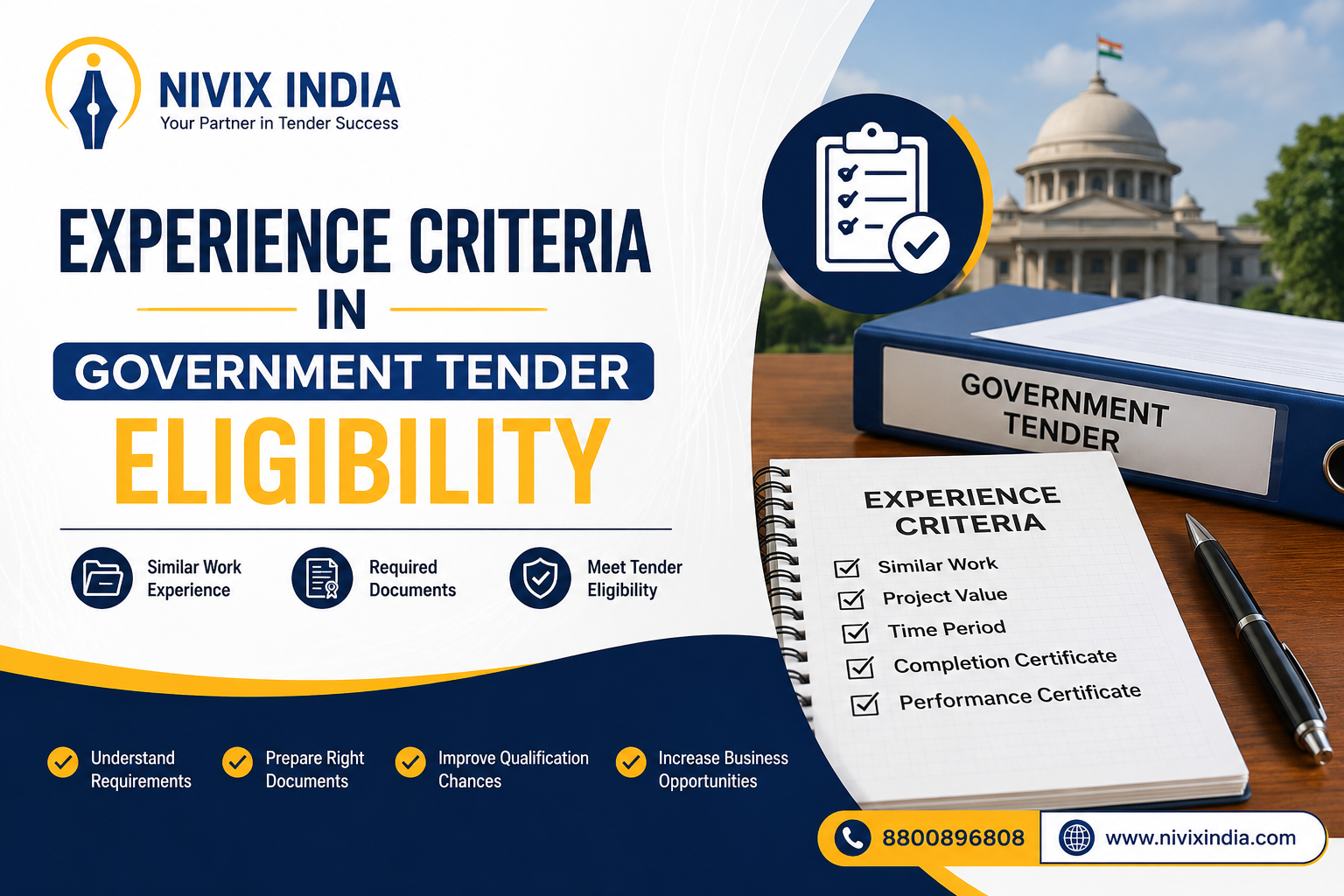
Experience criteria refer to the requirement that a bidder should have completed similar projects or supplied similar goods/services within a specified period. Tender documents generally are as:
• Nature of similar work
• Number of completed projects
• Minimum project value
• Time period (such as the last 3–7 years)
• Supporting documents required
Why Do Government Departments Ask for Experience?
Government organizations include experience requirements to:
• Select capable and reliable bidders
• Reduce project execution risks
• Ensure quality delivery
• Verify technical competence
• Maintain transparency in procurement
Common Experience Requirements
Depending on the tender, authorities may ask :
• Completion of similar works
• Experience in a specific industry
• Past government or PSU projects
• Technical expertise
• Performance certificates
• Work completion certificates
• Client references
Documents Usually Required
To prove experience, bidders may need to submit:
• Work Order Copies
• Completion Certificates
• Performance Certificates
• Client Certificates
• Purchase Orders
• Invoices (where applicable)
• Agreement Copies Can New Businesses Participate?
Yes, in some cases.
Certain tenders provide relaxations for eligible MSMEs or recognised startups, while many projects still require mandatory technical experience. Therefore, every bidder should carefully read the tender conditions before applying.
Tips to Meet Experience Criteria
• Read every eligibility clause carefully.
• Keep experience documents updated.
• Organize certificates in advance.
• Verify that previous projects match the tender scope.
• Avoid submitting incomplete or unrelated documents.
• Seek professional assistance if any requirement is unclear.
Common Mistakes
Many bidders’ face rejection due to:
• Upload incomplete certificates
• Submit unrelated project experience
• Ignore minimum value requirements
• Miss document deadlines
• Misinterpret the definition of "similar work"
How Nivix India Can Help
Understanding tender eligibility conditions can be challenging, especially for first-time bidders. Nivix India assists businesses with:
• Tender eligibility review • Document verification
• Bid preparation support
• Technical documentation
• Government tender consultancy
• Gem and e-procurement assistance
Our team helps businesses prepare complete and compliant tender documentation while following the specific requirements of each tender.
Conclusion
Experience criteria are one of the most important factors in government tender eligibility. Proper documentation, relevant project experience, and careful review of tender conditions can significantly improve the chances of qualifying for technical evaluation. Every tender has unique requirements, so bidders should always rely on the official tender document rather than assumptions.
Experience criteria refer to the requirement that a bidder should have completed similar projects or supplied similar goods/services within a specified period. Tender documents generally are as:
• Nature of similar work
• Number of completed projects
• Minimum project value
• Time period (such as the last 3–7 years)
• Supporting documents required
Why Do Government Departments Ask for Experience?
Government organizations include experience requirements to:
• Select capable and reliable bidders
• Reduce project execution risks
• Ensure quality delivery
• Verify technical competence
• Maintain transparency in procurement
Common Experience Requirements
Depending on the tender, authorities may ask :
• Completion of similar works
• Experience in a specific industry
• Past government or PSU projects
• Technical expertise
• Performance certificates
• Work completion certificates
• Client references
Documents Usually Required
To prove experience, bidders may need to submit:
• Work Order Copies
• Completion Certificates
• Performance Certificates
• Client Certificates
• Purchase Orders
• Invoices (where applicable)
• Agreement Copies Can New Businesses Participate?
Yes, in some cases.
Certain tenders provide relaxations for eligible MSMEs or recognised startups, while many projects still require mandatory technical experience. Therefore, every bidder should carefully read the tender conditions before applying.
Tips to Meet Experience Criteria
• Read every eligibility clause carefully.
• Keep experience documents updated.
• Organize certificates in advance.
• Verify that previous projects match the tender scope.
• Avoid submitting incomplete or unrelated documents.
• Seek professional assistance if any requirement is unclear.
Common Mistakes
Many bidders’ face rejection due to:
• Upload incomplete certificates
• Submit unrelated project experience
• Ignore minimum value requirements
• Miss document deadlines
• Misinterpret the definition of "similar work"
How Nivix India Can Help
Understanding tender eligibility conditions can be challenging, especially for first-time bidders. Nivix India assists businesses with:
• Tender eligibility review • Document verification
• Bid preparation support
• Technical documentation
• Government tender consultancy
• Gem and e-procurement assistance
Our team helps businesses prepare complete and compliant tender documentation while following the specific requirements of each tender.
Conclusion
Experience criteria are one of the most important factors in government tender eligibility. Proper documentation, relevant project experience, and careful review of tender conditions can significantly improve the chances of qualifying for technical evaluation. Every tender has unique requirements, so bidders should always rely on the official tender document rather than assumptions.
TENDER ASSISTANCE
Need Help With Tender Filing?
Get expert assistance for tender search, documentation, eligibility checks and bid submission.
